- Rosary and The Way
- Journey the Mysteries
- Luminous Mysteries of the Rosary
- The Wedding At Cana
The Wedding at Cana
The Wedding at Cana
Come with me to a small wedding in Galilee, where the wine has run out and a quiet word from Mary changes everything. Let's stand among the guests at the Wedding at Cana and watch Jesus's first miracle unfold.

Praying this mystery as part of your daily Rosary? Continue your journey through Thursday's beads, or step back to see the full path.
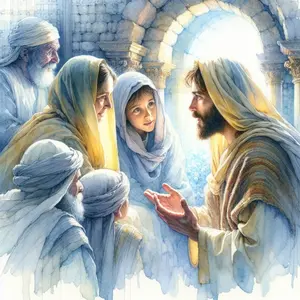
Let's walk into Cana together. The Wedding at Cana isn't a story I want to simply tell you — it's a place I want us to stand in. So picture it with me: a small village in Galilee, music spilling out into the street, the smell of food still warm from the kitchen, and a crowd of guests who have no idea they're about to witness the first miracle of Jesus's public life.
The Wedding at Cana
We find a place near the edge of the celebration, close enough to see Mary moving through the crowd. She isn't performing any role here — she's simply present, the way a mother is present at any gathering, noticing things before anyone asks her to. And what she notices first is trouble: the wine has run out. At a wedding feast in that culture, this wasn't a small embarrassment. It threatened to unravel the whole celebration, to leave the bridegroom shamed in front of everyone he loved.
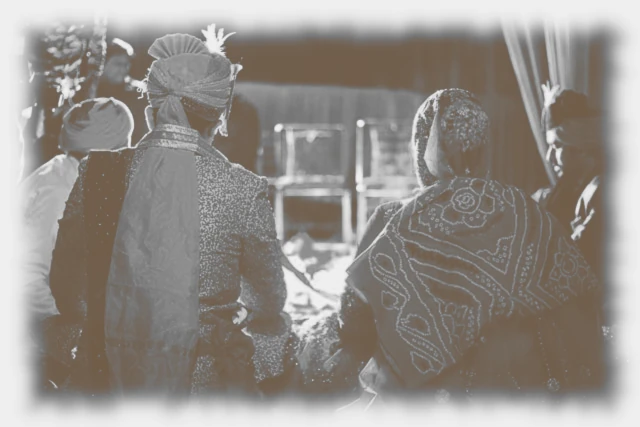
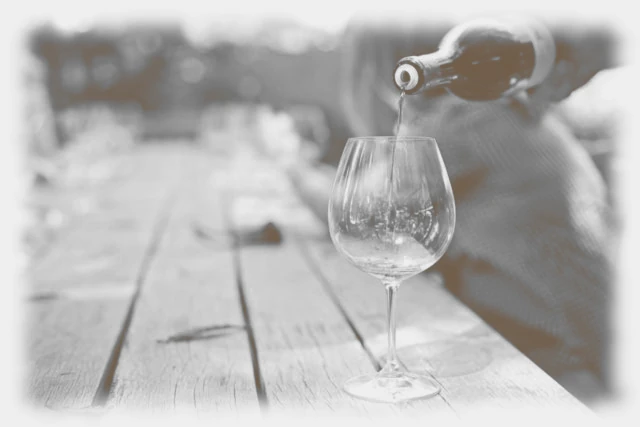
Watch with me as Mary turns to her Son. She doesn't ask Him for anything directly — she simply says, "They have no wine." It's such a small sentence to carry so much trust. She isn't demanding a miracle; she's naming a need and leaving the rest to Him. Jesus answers that His hour has not yet come, and for a moment we might expect the conversation to end there. But Mary already knows her Son. She turns to the servants standing nearby and says the words that have echoed through every Wedding at Cana reflection since: "Do whatever He tells you."
That's the moment I keep coming back to whenever I stand in this mystery. Mary doesn't manage the outcome. She doesn't hover or repeat herself. She says her piece and steps back, fully confident that whatever Jesus chooses to do will be enough. If we're looking for a model of how to bring our own needs to God, the Wedding at Cana hands it to us plainly: name what's missing, and then trust the timing isn't ours to control.
The Stone Water Jars
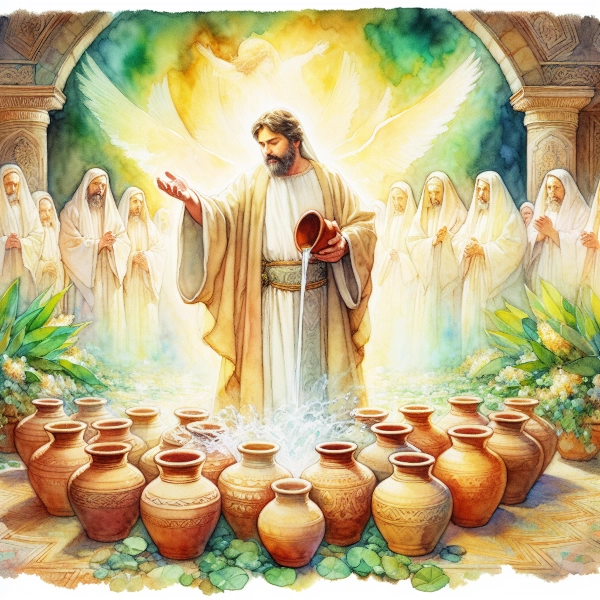
Look over there, against the wall — six large stone jars, the kind every Jewish household kept for ceremonial washing before meals. Each one could hold twenty to thirty gallons. They weren't decorative; they were ordinary, practical, used for ritual purity and nothing more. And that's exactly why I find this detail of the Wedding at Cana so moving. Jesus doesn't reach for something rare or sacred-looking. He points to the jars everyone has walked past a hundred times and says, simply, fill them with water.
We watch the servants fill each jar to the brim, probably wondering what this could possibly accomplish. Then comes the instruction to draw some out and carry it to the master of the banquet — and we hold our breath along with them, because none of us standing here yet know what's about to happen. When the master tastes it, his face changes. "Everyone brings out the best wine first... but you have saved the best till now." The water has become wine, and not the leftover kind — the best of the celebration, arriving last.
I think about those jars more than almost any other detail in this mystery. They were meant for washing, for ritual, for the unglamorous work of getting ready. And Jesus took them — exactly as they were, exactly where they already stood — and made them vessels of abundance instead. The Wedding at Cana tells us something true about how God tends to work: not by replacing what's ordinary in our lives with something flashier, but by filling what's already there until it overflows.
There was a wedding at Cana in Galilee, and the mother of Jesus was there. Jesus and his disciples had also been invited. John 2:1,2
When the wine provided for the wedding was all finished, the mother of Jesus said to him, "They have no wine." John 2:3,4
Jesus said, "Woman, why turn to me? My hour has not come yet." John 2:4
She said to the servants, "Do whatever he tells you." So he told them, "Fill the jars with water." John 2:5,7
"Now take some to the steward." When the steward tasted it he exclaimed, "You have kept the best wine till now?" John 2:8,10
This was the first of the signs given by Jesus, and his disciples believed in him. John 2:11
Then he came to Judea and some Pharisees asked him, "Is it against the law for a man to divorce his wife?" Mark 10:1,2
Jesus said, "From the beginning of creation God made them male and female." Mark 10:7
"This is why a man must leave father and mother and be joined to his wife." Mk 10:8; Gn 2:24
"They are no longer two, therefore, but one body. So then, what God has united, man must not divide." Mark 10:9, 10
With permission from The Scriptural Rosary, written by Joanne & John Bolger.
Published with permission from Christianica (America) Center.
Mary's words at the Wedding at Cana — naming the need, then stepping back — are a kind of prayer most of us never quite master. We want to manage the outcome, to know when and how. If that tension between asking and waiting is familiar to you, it's worth sitting with longer than one mystery allows.
Go Deeper · Path 5 Explore the Inner Journey → Continue the Luminous Mysteries Continue to the Proclamation of the Kingdom →You might like these
The Annunciation of Mary | Reflection & Rosary
The Annunciation of Mary reflection: walk the road to Ein Karem with Mary, and pray the Scriptural Rosary for this Joyful Mystery.
The Coronation of Mary | Reflection & Rosary
The Coronation of Mary reflection: witness her crowning as Queen of Heaven, and pray the Scriptural Rosary for this Glorious Mystery.
The Transfiguration of Jesus | Meaning & Scriptural Rosary
The Transfiguration of Jesus reflection: stand on Mount Tabor with Peter, James, and John, and pray the Scriptural Rosary for this Luminous Mystery.