- Rosary
- Sorrowful Mysteries
- The Agony in the Garden
The Agony in the Garden
Garden of Gethsemane
After celebrating the Passover meal with His disciples, Jesus took Peter, James, and John to the Garden of Gethsemane. There, under the ancient olive trees, He felt the crushing weight of what was to come. Jesus knelt down, His face contorted in anguish, and He began to pray fervently to His heavenly Father. The silence of the garden was punctuated by His whispered pleas, "Father, if it is possible, let this cup pass from Me; yet not My will, but Yours be done."
As Jesus prayed, His sweat became like drops of blood, an intense physical manifestation of His inner turmoil. The disciples, oblivious to the significance of the hour, fell asleep, leaving Jesus to carry the burden by Himself. In His profound sorrow and anguish, an angel came to offer Him strength, but the enormity of humanity’s sins weighed heavily on His heart.
Join me as I rewrite the history of this moment to deepen my understanding and faith.
Continue praying the Rosary, or return to the full meditation:
The Agony in the Garden

After the Last Supper, Jesus and His disciples left the Upper Room and made their way to the Garden of Gethsemane, a serene place they had visited often. As they entered the garden, the weight of what was to come pressed heavily on Jesus' heart. He asked Peter, James, and John to stay with Him, saying, “My soul is overwhelmed with sorrow to the point of death. Stay here and keep watch with Me.”
Moving a little farther into the garden, Jesus fell to the ground and began to pray. He was in deep agony, fully aware of the suffering that awaited Him. The reality of bearing the sins of the world bore down on Him, and He prayed fervently, “Father, if it is possible, may this cup be taken from Me. Yet not as I will, but as You will.”
As He prayed, Jesus' distress became so intense that His sweat was like drops of blood falling to the ground. Despite the presence of His closest disciples, He found Himself alone in His sorrow. When He returned to Peter, James, and John, He found them asleep. “Couldn't you men keep watch with Me for one hour?” He asked, with a mixture of disappointment and compassion. “Watch and pray so that you will not fall into temptation. The spirit is willing, but the flesh is weak.”
Jesus withdrew again to pray, pouring out His heart to His Father, expressing His anguish and submission to God’s will. After a time, He returned to find His disciples sleeping once more. This pattern repeated a third time, with Jesus finding solace in prayer and His disciples struggling against their fatigue.
In the depths of His agony, an angel appeared to Jesus, strengthening Him for the trials ahead. Though His soul was in torment, He accepted the path set before Him, resolving to face the suffering with unwavering obedience to His Father's will.
As the night wore on, Judas, one of the twelve disciples, arrived with a large crowd armed with swords and clubs, sent by the chief priests and elders. Judas approached Jesus and greeted Him with a kiss, the prearranged signal to identify Him to the arresting party. “Greetings, Rabbi!” Judas said, kissing Him. Jesus replied, “Do what you came for, friend.”
The soldiers seized Jesus, and in the ensuing chaos, Peter drew his sword and struck the servant of the high priest, cutting off his ear. But Jesus intervened, “Put your sword back in its place,” He said. “For all who draw the sword will die by the sword.” He then touched the servant's ear and healed him, demonstrating mercy even in that moment of betrayal.
Jesus addressed the crowd, questioning their need to come with weapons as if He were a common criminal. “Every day I sat in the temple courts teaching, and you did not arrest Me. But this has all taken place that the writings of the prophets might be fulfilled.” Then, all the disciples deserted Him and fled, leaving Jesus to face His accusers alone.
This moment in the Garden of Gethsemane marked the beginning of Jesus’ Passion, a profound testament to His love, sacrifice, and obedience to the divine plan for humanity’s redemption.
The Scriptural Rosary
Jesus came with them to Gethsemane. And sadness came over him, and great distress. Matt 26:36, 37
Then he said, 'My soul is sorrowful to the point of death. Wait here and keep awake with me.' Matt 26:38
Then he withdrew from them, and knelt down and prayed. Luke 22:41
'Father, if you are willing, take this cup away from me. Nevertheless, let your will be done not mine.' Luke 22:42
Then an angel appeared to him, coming from heaven to give him strength. Luke 22:43
In his anguish he prayed even more earnestly. Luke 22:44
And his sweat fell to the ground like great drops of blood. Luke 22:44
Then he came back to his disciples and found them sleeping, and he said, 'So you had not the strength to keep awake with me one hour?' Matt 26:40
'You should be awake and praying not to be put to the test.' Matt 26:41
'The Spirit is willing, but the flesh is weak.' Matt 25:41
With permission from The Scriptural Rosary book written by Joanne & John Bolger
Published and permission from Christianica (America) Center
Mary's Presence and Feeling
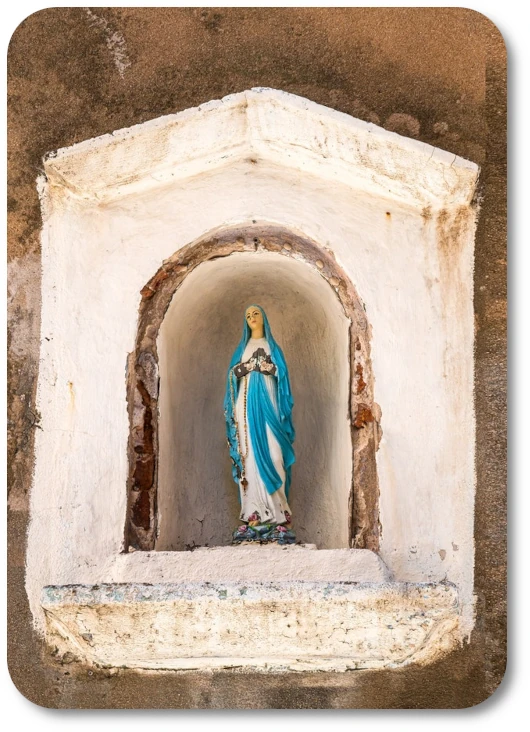
While the Gospel narratives do not explicitly mention Mary being present in the Garden of Gethsemane, one can reflect on the possible emotions she might have experienced at that time. In her humble home in Jerusalem, Mary was likely awake, sensing a deep unease in her heart. As any mother would, she felt an inexplicable bond with her Son, and the sorrow that shadowed her heart mirrored the agony Jesus felt in the garden.
Mary's faith was steadfast, yet her heart was heavy with sorrow. She may have recalled Simeon’s prophecy, “a sword will pierce your own soul too,” realizing that this was the moment of fulfillment. Her prayers were undoubtedly filled with anguish and love, as she offered her own suffering to the Father, united with her Son’s redemptive mission.
In the solitude of her room, Mary’s tears flowed freely, her hands clasped tightly in prayer. She trusted in God's plan but could not help the pangs of a mother's heart, aching for her beloved Son. Her silent presence, though not physically beside Him, was a source of spiritual strength for Jesus as He faced the looming darkness.
When God Calls Me to Pray

Awakened from my sleep in the early morning hours, I had a strong sense that I needed to pray for my brother. It was as if a gentle, yet insistent nudge from the Holy Spirit stirred me awake. Reaching beneath my pillow, I found my Rosary and clutched it tightly. The cool beads offered a familiar comfort as I began to pray fervently. The words of the Hail Mary flowed from my lips with a sense of urgency and devotion, each prayer a plea for my brother’s well-being and protection.
As I continued to pray, I felt a profound sense of peace envelop me. The quiet of the early morning was broken only by the soft whisper of my prayers, creating a serene and sacred atmosphere. In those moments, I felt connected to God and to my brother in a way that transcended physical distance. My heart was filled with trust and hope, knowing that my prayers were heard and that God's grace would provide the strength and support my brother needed. This experience reminded me of the power of prayer and the deep bond we share with our loved ones through faith.
Reflection on the Seven Phrases
“My soul is overwhelmed with sorrow to the point of death.” - This expression of profound sorrow reveals Jesus' humanity and vulnerability. It invites us to reflect on the weight of suffering and the deep empathy He has for our own struggles.
“Stay here and keep watch with Me.” - These words highlight the importance of companionship and support in times of distress. They remind us of the call to be present for one another, especially in moments of sorrow and difficulty.
“Father, if it is possible, may this cup be taken from Me.” - Jesus' plea reflects the natural human desire to avoid suffering. It encourages us to bring our fears and desires to God, trusting in His understanding and compassion.
“Yet not as I will, but as You will.” - This statement of surrender showcases Jesus' obedience and trust in the Father’s plan. It challenges us to embrace God’s will, even when it contradicts our own desires.
“Couldn't you men keep watch with Me for one hour?” - Jesus' gentle rebuke to the disciples emphasizes the importance of vigilance and prayer. It calls us to remain spiritually alert and committed, even when faced with fatigue or distractions.
“The spirit is willing, but the flesh is weak.” - This acknowledgment of human frailty is a reminder of our need for God's grace. It encourages us to seek strength through prayer and to recognize our dependence on divine help.
“Rise, let us go! Here comes My betrayer!” - These words signify Jesus' readiness to face His destiny. They inspire us to confront our challenges with courage and to trust in God's plan, even when it leads us into difficult situations.
Significance of 3 Times Praying
Perseverance in Prayer: Jesus' repeated prayers show His persistence and dedication. Despite His overwhelming sorrow and distress, He continued to turn to His Father in prayer. This emphasizes the importance of persevering in prayer, even when facing immense challenges or feeling abandoned.
Expression of Humanity: The threefold prayer highlights Jesus' humanity. It shows His genuine struggle with the impending suffering and His natural desire to avoid it. Jesus' humanity is fully displayed as He wrestles with His emotions and the daunting task before Him.
Total Surrender to God's Will: Through His repeated prayers, Jesus ultimately submits to the will of the Father. Each prayer deepens His acceptance of God's plan, culminating in His readiness to face the Passion. This act of surrender serves as a powerful example for us to trust and submit to God's will, even when it is difficult or not aligned with our own desires.
Symbolic Number: In biblical tradition, the number three often signifies completeness or perfection. Jesus praying three times can be seen as a symbol of His complete and perfect submission to the Father’s will. It also aligns with other significant events in His life, such as His three days in the tomb, three falls with the Cross and Peter’s threefold denial and subsequent threefold affirmation of love.
Continue praying the Rosary, or return to the full meditation:
You might like these
The Annunciation of Mary: A Virtual Pilgrimage in Nazareth
The Annunciation of Mary: Join a prayerful virtual pilgrimage. Walk from Nazareth to Ein Karem and reflect on the "Yes" that changed the world forever.
The Ascension of Jesus
The Ascension of Jesus is a event that bridges His earthly ministry and the eternal hope of believers.
The Transfiguration of Jesus Revelation of Glory
The Transfiguration of Jesus reveals His divine nature, strengthening faith and illuminating the path to salvation.