- Rosary and The Way
- Journey the Mysteries
- Luminous Mysteries of the Rosary
- The Kingdom of God
The Kingdom of God
The Kingdom of God
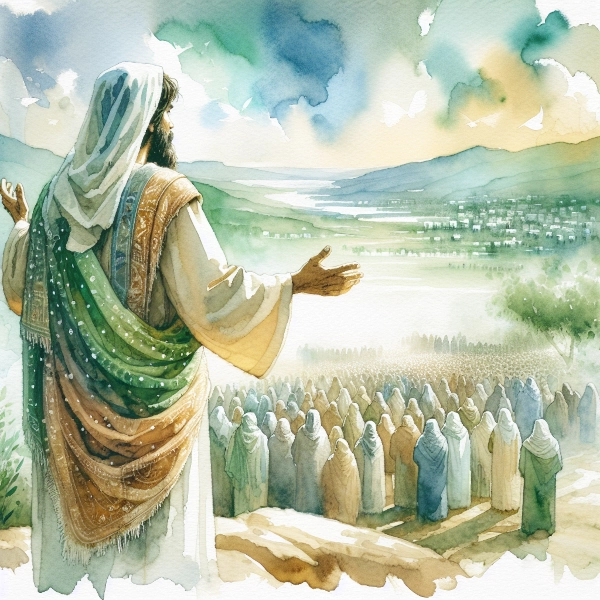
Come walk the dusty roads of Galilee with me, where a teacher is saying something no one has quite heard before — that the Kingdom of God isn't a place to find, but a way to live, hidden close enough to touch if we're willing to look.
Praying this mystery as part of your daily Rosary? Continue your journey through Thursday's beads, or step back to see the full path.
Let's walk into Galilee together and listen. The Kingdom of God is the phrase on everyone's lips that day — a teacher has arrived speaking of something that isn't a place with castles or borders, but a way of living that's somehow already near, already available, if we're willing to recognize it.
The Kingdom of God
The Kingdom of God isn't a distant promise to wait on, the way we might wait for a far-off prize. Jesus speaks of it as something close enough to touch right now — present in how we treat the person next to us, in the small decisions we make today, long before any final reward arrives. It's a treasure worth everything we have, He says, and standing here among the crowd, we start to understand He means that literally.
Daniel's Eyes
Let's see this through the eyes of a young man named Daniel, standing a few feet from us in the crowd. He's always wanted something more than the routine of his days — the same fields, the same market stalls, the same small talk. When the teacher describes a hidden treasure buried in a field, treasure so valuable that the man who found it sold everything he owned just to buy that plot of land, Daniel can't stop turning the story over in his mind. What could possibly be worth giving up everything for?
As Daniel keeps listening, the answer starts to take shape. The Kingdom of God was never about wealth or status — it was about living with purpose, humility, and love, even when no one was watching. We watch with Daniel as a group of children run up laughing, and the teacher welcomes them with open arms instead of waving them off the way the grown men nearby expect Him to. "Unless you welcome the Kingdom of God like a little child," He says, "you will never enter it." Daniel realizes, the way we're realizing alongside him, that this Kingdom isn't a grand gesture. It's a sincere heart, willing to receive life with the same open trust a child has — and willing to give up whatever stands in the way of that trust.
By the time the crowd begins to disperse, Daniel walks home differently than he arrived. He looks at the small field he plows every day and sees it not as a chore, but as a place where the Kingdom of God can be lived out — one act of kindness, one forgiven grievance, one shared meal at a time. The Kingdom was never a place to be found. It was a way of walking through the very life Daniel already had.
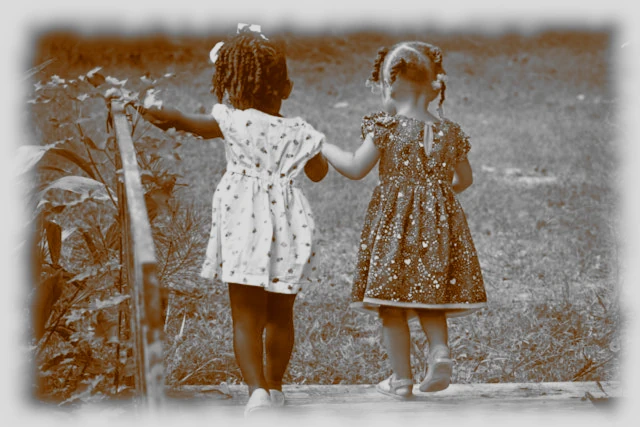
There's another moment worth pausing on as we keep walking. Parents are bringing their children toward Jesus, eager just to let them be near Him. The disciples — the very men who have been listening to every word about the Kingdom of God — try to wave the children off. To them, the children are a distraction from the important work. It's a small, human mistake, and it's the kind we make constantly: assuming that what's small or unglamorous must be unimportant. Jesus stops them. He draws the children close instead, and says that unless we welcome the Kingdom of God the way a child does — without calculation, without an agenda, with open trust — we won't enter it at all. Even the disciples, standing closer to Him than anyone, missed the point in that moment. It's a quiet reminder that nearness to holy things doesn't guarantee we understand them.
A Personal Reflection
I had a conversation recently that hasn't left me, and I think it belongs here on this page more than almost anywhere else on this site. A gentleman I spoke with teaches students for a living, and he told me about a demonstration he runs in his classroom. He brings in a piece of two-by-four wood, some nails, and a hammer, and he tells his students that anyone who can drive three nails straight into the board, without bending them, gets an automatic A. Out of thirty students, only three even tried. None of them managed it.
His point wasn't really about carpentry. It was about how little patience most of us have left for anything that asks something difficult of our hands, our attention, our time. He went on to challenge those same students to turn off their phones for just the school hours, and the complaints were immediate — they couldn't imagine giving it up, even for a few hours, even for a grade. Listening to him, I thought about the hidden treasure in the field, and about the man who sold everything for it. We say we'd give up anything for what truly matters. Then we can't put a phone down for an afternoon.
I told him something I don't say to many people: that every so often, I delete the games off my own phone. Not because anything dramatic has happened, but because I notice I've drifted — that I've spent an hour somewhere small and meaningless when I could have been praying, reading Scripture, or simply sitting quietly in adoration. The Kingdom of God doesn't usually ask for one dramatic sacrifice. More often it asks for the small, repeated choice to put down the easy thing and pick up the better one. That's the field I keep having to buy back, over and over, one ordinary day at a time.
After John had been arrested, Jesus went into Galilee. There he proclaimed the Good News from God. Mark 1:14
"The time has come; the kingdom of God is close at hand! Repent, and believe the Good News!" Mark 1:15
And he taught: "The kingdom of God is like a treasure hidden in a field which someone has found." Matt 13:44
"He goes off happy, sells everything he owns and buys the field." Matt 13:44
"The kingdom of God is among you. So walk while you have the light, or darkness will overtake you." Lk 17:21; Jn 12:35
"You are the light of the world, but your light must shine to give praise to your Father in heaven." Matt 5:14, 16
"For much will be required of those to whom much is given." Luke 12:48
"And once the hand is laid on the plow, no one who looks back is fit for the kingdom of God." Luke 9:62
And Jesus called a little child to him, and put his arms around him. Mt 18:2; Mk 9:36
Saying, "I tell you solemnly, anyone who does not welcome the kingdom of God like a little child will never enter it." Mark 10:15
With permission from The Scriptural Rosary, written by Joanne & John Bolger.
Published with permission from Christianica (America) Center.
The Kingdom of God rarely asks for one dramatic sacrifice. More often it's the daily, repeated turning away from what's easy toward what's actually good — the same turning the Gospel calls repentance, not as guilt, but as a fresh choice, made again and again.
Go Deeper · Path 4 Learn about Repentance → Continue the Luminous Mysteries Continue to the Transfiguration →