- Rosary and The Way
- The Way
- Via Crucis Stations
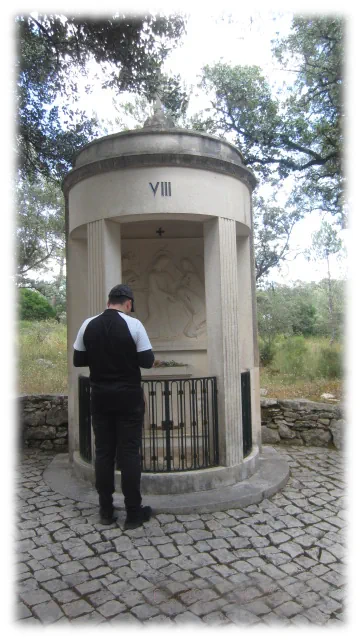
- Station 8
Via Crucis Station 08
Valinhos Sanctuary
The Sacred Way of the Cross
Via Crucis Station 08
JESUS MEETS THE WOMEN OF JERUSALEM
Via Crucis Station 08 presents the encounter between Jesus and the weeping women of Jerusalem. Despite His agony, Christ pauses to address them with words that challenge me every time I hear them: "Daughters of Jerusalem, do not weep for me; weep instead for yourselves and for your children." This station reveals Christ's prophetic concern even in His darkest hour. At Valinhos Sanctuary, where Our Lady warned of chastisement if humanity doesn't convert, this station carries urgent relevance for my life. Jesus isn't seeking pity; He's issuing a warning. I'm learning that true compassion must lead to conversion. Tears without transformation are insufficient. The women weep for His suffering, but Christ redirects their attention to the greater tragedy: souls lost for eternity.
V. We adore Thee, O Christ, and we praise Thee.
R. Because by Thy holy cross, Thou hast redeemed the world.
Lord Jesus, You turn my easy tears into a mirror. I weep watching Your pain in movies and art, but do I weep for my own sins? I feel moved watching Your passion portrayed, but do I feel moved enough to actually change my life? You tell these women to weep for themselves, to weep for their children, because judgment is coming for all who reject Your sacrifice. Am I like these women—moved to emotion but not to transformation? Do I cry at the stations but continue in the same sinful patterns? Do I feel sorry for You but not sorry enough to stop hurting You with my choices? Give me tears that actually transform me. Give me sorrow that leads to real repentance, not just religious feelings. Let my compassion for Your suffering become genuine conversion of my heart and change in my behavior.
Via Crucis Station 08:
Three Types of Tears
From emotion to transformation
Sentimental Tears
Feeling Without Changing
The women weep for Jesus, moved by His suffering. But are they moved to conversion? Sentimental tears feel spiritual but change nothing. We cry at movies, at stations of the cross, at touching homilies—yet leave unchanged. This is emotion mistaken for devotion.
Tears of Compunction
Godly Sorrow for Sin
Compunction means being "pricked" in conscience—genuine sorrow for having offended God. These tears arise from recognizing our sin caused Christ's suffering. They're uncomfortable, humbling, but healthy. They lead us to confession, to amendment of life, to real change.
Transformative Tears
Grief That Changes Us
The highest tears are those that transform us. They flow from love that cannot bear to hurt the Beloved anymore. They lead to concrete decisions, changed behaviors, new commitments. These are the tears Jesus asks for—weep for yourselves and change your lives.
Deepen Your Journey
Explore the richness of this station through sacred history, spiritual wisdom, and contemplative practices.
The Fátima Connection
Our Lady's tears at Fátima echo Jesus's words to the women of Jerusalem. She weeps not for herself but for her children walking toward perdition. The message is identical: "Weep for yourselves and your children." She warned the shepherd children that many souls go to hell, and to save them, God wishes to establish devotion to her Immaculate Heart.
Like Jesus, Mary doesn't want my pity—she wants my conversion. She doesn't need my tears about her sorrows—she needs my prayers, my sacrifices, my changed life. The question I'm asking myself is: Do my devotions lead to real change, or are they just emotional experiences that leave my life unchanged?
Wisdom from Saints
St. Augustine's conversion story moves me because it shows the difference between worldly sorrow and godly sorrow. He confessed how late he came to love God, the Beauty ever ancient and ever new. According to St. Ignatius of Loyola, tears are a gift from God, but they must be the right kind—tears of compunction for sin, tears of gratitude for mercy, tears of love for the beloved.
St. John Chrysostom taught that weeping over Christ's sufferings is good, but better still is weeping over our own sins which caused those sufferings. I'm learning to ask: Are my tears about me feeling moved, or about me actually moving toward God?
Contemplative Practice
Examination of Conscience: What do I actually weep over? My disappointments or my sins? My suffering or others' damnation? what moves me to tears, then asking God to give me His tears instead of my self-focused ones.
Prophetic Weeping: choosing someone I know who has rejected faith or walked away from God, and actually praying and fasting for their conversion. The women of Jerusalem wept but likely didn't change their lives. I'm committing to one concrete change this week that demonstrates my sorrow is more than sentiment.
Continue Your Prayer Journey with the Rosary
Your journey does not end here. Every step of prayer deepens your relationship with Christ crucified. Explore additional resources to cultivate grace and carry the peace of this sacred moment into daily life.
How to Pray the Rosary
Step-By Step Guide for Beginners →
Friday Rosary - Sorrowful Mysteries
Meditate on the Passion of Christ →
Sorrowful Mysteries
Begin a Virtual Pilgrimage →
Contemplative Meditation Prayer
Enter Deep Prayer and Silence with God →
What is the Virtue of Fidelity
Meaning, Examples and Faithful Living →