- Rosary and The Way
- The Way
- Via Crucis Stations
- Station 1
Via Crucis Station 01
Valinhos Sanctuary
The Sacred Way of the Cross
Via Crucis Station 01
JESUS IS CONDEMNED TO DEATH
Via Crucis Station 01 marks the moment when Pontius Pilate condemns the innocent Christ to death. Standing before the crowds who cry "Crucify Him," Jesus accepts the unjust sentence in silence, becoming the Lamb led to slaughter. This station invites us to witness what happens when divine justice meets human injustice. At Valinhos Sanctuary, pilgrims encounter the profound mystery of God's love—a love so complete that Christ willingly embraces condemnation to free us from sin's ultimate penalty. As I walk this first station, I'm challenged to examine my own judgments, my silences in the face of evil, and the times I've stood with the condemning crowd rather than with truth.
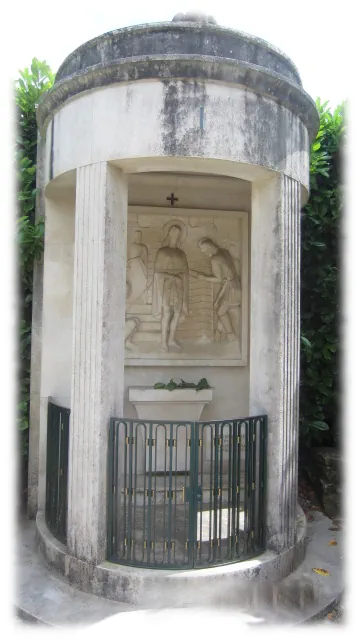
V. We adore Thee, O Christ, and we praise Thee.
R. Because by Thy holy cross, Thou hast redeemed the world.
Lord Jesus, at Via Crusis Station 01, I watch You stand innocent before Your accusers. You who knew no sin became sin for us. How often have I condemned others with my words, my assumptions, my quick judgments? How many times have I remained silent when truth needed defending? You accepted this unjust verdict without protest, trusting completely in the Father's plan. I struggle with this kind of surrender. I want to defend myself, to prove my innocence, to make sure everyone knows when I've been wronged. Teach me to let go of my need to be right. When I am falsely accused, help me to stand in Your strength. When I witness injustice, give me courage to speak Your truth with love, even when it costs me.
Via Crucis Station 01: Voices of Injustice
Three ways condemnation echoes through history
False Accusation
When Truth is Silenced
Jesus stands innocent yet condemned, truth itself put on trial. Throughout history, the innocent continue to face false witness—those wrongly imprisoned, the falsely accused, the scapegoated. This voice of injustice calls us to defend truth even when lies are louder.
Mob Mentality
The Crowd's Dangerous Power
Individual voices of reason are drowned out by the roaring mob demanding crucifixion. The crowd abandons rational thought for emotional fury. This voice reminds us how easily we follow the majority rather than stand alone for what is right.
Complicit Silence
Pilate's Handwashing
Pilate washes his hands, claiming neutrality while enabling murder. His silence is consent, his inaction a decision. This voice confronts our own moral cowardice—the times we stay silent when we should speak, absent when we should act.
Deepen Your Journey
Explore the richness of this station through sacred history, spiritual wisdom, and contemplative practices.
The Fátima Connection
Via Crucis Station 01 and the condemnation of Jesus finds echo in what Our Lady revealed at Fátima about humanity's rejection of God. The Angel of Peace who appeared at Valinhos taught the shepherd children to make reparation for those who refuse divine mercy. Just as the crowds chose Barabbas over Christ, Fátima's message warns that souls continue to reject the Savior through sin and indifference.
Our Lady called for prayer and sacrifice to console the Heart of Jesus, still wounded by humanity's ongoing "No" to grace. As I contemplate this first station, I'm faced with my own choices: Do I choose Christ or the world? Do I stand with Him or with the crowd? These aren't just historical questions—they're daily decisions I make.
Wisdom from Saints
According to the writings of St. Thomas More, who faced his own unjust execution, spiritual strength comes from knowing you serve God first above all earthly powers.
St. Maximilian Kolbe taught that we should seek truth and serve it when we find it, regardless of the cost. The Dominican mystic Blessed Henry Suso reflected on how Christ's silence under false accusation speaks more powerfully than any defense, proclaiming perfect trust in the Father's will.These saints faced their own versions of Station 01—unjust condemnation, false accusations, death sentences. Their witness reminds me that this station isn't just about Jesus two thousand years ago. It's about how I respond when truth is on trial in my own life.
Contemplative Practice
I try to place myself in Pilate's courtyard in my imagination. I see the Roman governor washing his hands, refusing responsibility. I hear the crowd's roar demanding crucifixion. I feel the injustice burning in my chest. Then I turn the mirror on myself: Where do I "wash my hands" of responsibility? Where do I follow the crowd rather than stand for truth?
This week, I'm practicing what I call the Prayer of Presence: When I witness or experience injustice, I pause and whisper, "Jesus, You stood here before me. Give me Your strength." I'm also journaling about a time I was falsely accused or judged—examining how I responded and how Christ's example might reshape my reactions in the future.
Continue Your Prayer Journey with the Rosary
Your journey does not end here. Every step of prayer deepens your relationship with Christ crucified. Explore additional resources to cultivate grace and carry the peace of this sacred moment into daily life.
How to Pray the Rosary
Step-By Step Guide for Beginners →
Friday Rosary - Sorrowful Mysteries
Meditate on the Passion of Christ →
Sorrowful Mysteries
Begin a Virtual Pilgrimage →
Contemplative Meditation Prayer
Enter Deep Prayer and Silence with God →
What is the Virtue of Fidelity
Meaning, Examples and Faithful Living →