- Rosary and The Way
- The Way
- Stations Landing
- Station 8
Lourdes High Station 08
The Espelugues
The Sacred Way of the Cross
Lourdes High Station 08
JESUS MEETS THE WOMEN OF JERUSALEM
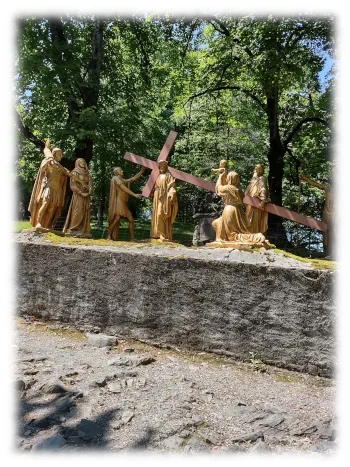
Lourdes High Station 08 brings us to Jesus' encounter with the women of Jerusalem who weep for Him on the road to Calvary. At Lourdes Espelugues Grotto, this station reveals Jesus' continued concern for others even in the depths of His own agony.
He stops to speak to these weeping women and redirects their compassion: "Do not weep for me, but weep for yourselves." This station challenges me to examine where I direct my grief. Am I moved by Christ's suffering in a way that truly transforms me, or do I keep my compassion at a safe emotional distance? He wants not just my tears but my conversion.
V. We adore Thee, O Christ, and we praise Thee.
R. Because by Thy holy cross, Thou hast redeemed the world.
Jesus, at Lourdes High Station 08, You stop to address the women who weep for You, and Your words shake me to the core: "Do not weep for me; weep for yourselves." You are dying, yet You are still teaching, still redirecting, still caring for others.
You know that emotional tears are not enough. You want transformation, not just sympathy. How many times have I cried over Your suffering without letting it change my life? How often have I felt moved by Your sacrifice and then lived as though it did not matter the very next day?
Let my compassion for Your suffering transform into commitment to Your way. Let my tears become purpose and my sorrow become genuine service.
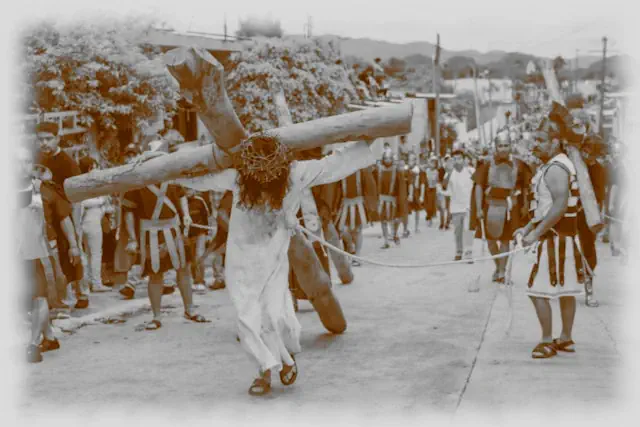
Witnesses at the Cross
Through the eyes of those who loved Him most
Mary, Mother of God
The Recognition of Mercy
These women weep for my Son and I am grateful for their compassion, but I understand why He tells them to weep instead for themselves and their children. He sees what is coming, not just His death but the suffering of generations, and even now He is thinking about their future.
He cannot help it. That is who He is. A mother knows her child's heart, and my Son's heart has always held the whole world inside it. Even on this road, even beneath this weight, He remains entirely Himself, giving what He has to those who need it, teaching until there is nothing left to teach.
Mary Magdalene
The Call to Self-Examination
I hear Him tell these women to weep for themselves and His words pierce me, because how much easier it is to weep for someone else's suffering than to face our own spiritual poverty honestly.
I wept many tears over my sins after He freed me, but before that encounter I was completely blind to how lost I was. Now I see these women crying for Him and I wonder whether they understand that He is doing this for them. Jesus is asking them, asking all of us, to look inward and examine where we are crucifying Him in our own lives. His suffering should lead us to repentance, not just to sympathy, and that is the difference between sterile compassion and redemptive love.

John, Beloved Apostle
The Teacher to the End
Even dying He teaches. Even suffering He preaches. That is Jesus, always thinking of others, always trying to help people see the truth that is right in front of them.
These women mean well, but He knows that sentimentality is not salvation and that their tears need to lead somewhere deeper. This moment teaches me something I need to carry into my own ministry: comfort without challenge is not fully loving. Jesus comforts, yes, but He also calls people higher. He meets them where they are and then refuses to leave them there. Love sometimes means redirecting tears from safe targets toward necessary and life-changing self-reflection.
Continue Your Prayer Journey with the Rosary
Your journey does not end here. Every step of prayer deepens your relationship with Christ crucified. Explore additional resources to cultivate grace and carry the peace of this sacred moment into daily life.
How to Pray The Rosary
Step-by-Step Guide for Beginners →
Friday Rosary - Sorrowful Mysteries
Meditate on the Passion of Christ →
What is the Virtue of Fidelity
Meaning, Examples and Faithful Living →
Sorrowful Mysteries
Begin a Virtual Pilgrimage →
Contemplative Meditation Prayer
Enter Deep Prayer and Silence with God →