- Rosary and The Way
- The Way
- Lourdes High Stations
- Station 1
Lourdes High Station 01
Lourdes High Stations
The Sacred Way of the Cross
Lourdes High Station 01
JESUS IS CONDEMNED TO DEATH
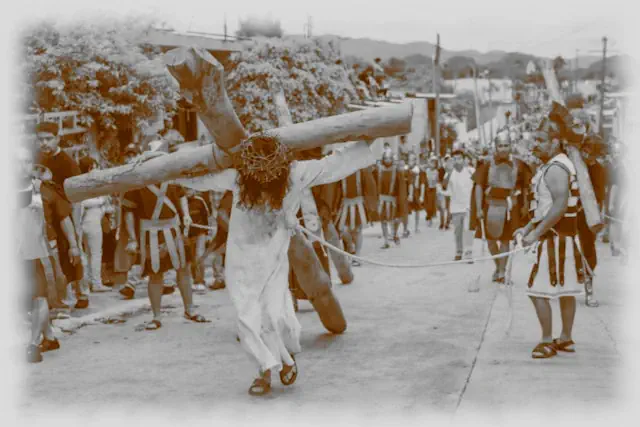
Lourdes High Station 01 marks the moment when Pontius Pilate condemns the innocent Christ to death. Standing before the crowds who cry "Crucify Him," Jesus accepts the unjust sentence in silence, becoming the Lamb led to slaughter.
This station invites us to witness what happens when divine justice meets human injustice. At Lourdes Espelugues Grotto, pilgrims encounter the profound mystery of God's love, a love so complete that Christ willingly embraces condemnation to free us from sin's ultimate penalty.
As I walk this first station, I am challenged to examine my own judgments, my silences in the face of evil, and the times I have stood with the condemning crowd rather than with truth.
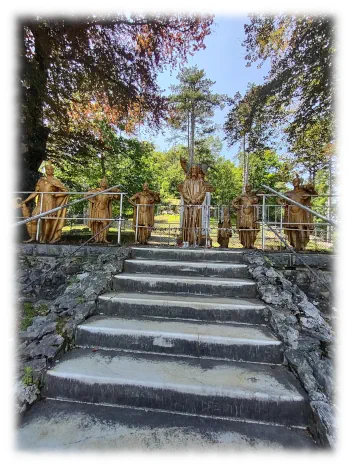
V. We adore Thee, O Christ, and we praise Thee.
R. Because by Thy holy cross, Thou hast redeemed the world.
Lord Jesus, at Lourdes High Station 01, I watch You stand innocent before Your accusers. You who knew no sin became sin for us, and I am undone by the weight of what that means. How often have I condemned others with my words, my assumptions, my quick judgments? How many times have I remained silent when truth needed defending?
You accepted this unjust verdict without protest, trusting completely in the Father's plan, and I struggle deeply with that kind of surrender. I want to defend myself, to prove my innocence, to make sure everyone knows when I have been wronged.
Teach me to let go of my need to be right. When I am falsely accused, help me to stand in Your strength rather than my own. When I witness injustice, give me courage to speak Your truth with love, even when it costs me something real.
Witnesses at the Cross
Through the eyes of those who loved Him most
Mary, Mother of God
The Pierced Heart
My soul magnified the Lord when the angel came, and now my soul is pierced as Simeon foretold. I carried Him beneath my heart for nine months, and now I carry this unspeakable sorrow as they condemn my Son, the only truly innocent one who ever lived.
I want to cry out, to defend Him, to tell them who He really is. But I remember the words I spoke at the beginning: "Behold the handmaid of the Lord." My yes at the Annunciation must be my yes now at this condemnation. God's ways are not our ways, and though I do not understand, I trust.
Mary Magdalene
The Devoted Disciple
They dare to judge Him? These men with their self-righteous fury and their carefully curated public holiness, they condemn the One who showed me what true holiness actually looks like. I was possessed by darkness and He freed me. I was defined by my past and He gave me a future.
Now the world that once condemned me condemns Him, and I see the terrible difference: I was guilty and He made me clean, while He is innocent and they make Him bear our filth. My tears will not save Him, but they witness to the truth that the world's judgment means nothing when you know you are loved by God.

John, Beloved Apostle
The Witness of Love
I thought I understood suffering when He spoke of drinking the cup and carrying the cross, and I even boasted I could do it alongside Him. Now I see my arrogance clearly. I can barely stand here and watch, let alone endure what He endures, yet I stay, not out of strength but because love holds me here.
Where else would I go? He chose me not because I am brave but because He is faithful. This unjust condemnation reveals something shattering: the world cannot comprehend the God who loves it. They sentence Love itself to death, and in doing so they prove how desperately we need the salvation He is about to win.
Continue Your Prayer Journey with the Rosary
Your journey does not end here. Every step of prayer deepens your relationship with Christ crucified. Explore additional resources to cultivate grace and carry the peace of this sacred moment into daily life.
How to Pray The Rosary
Step-by-Step Guide for Beginners →
Friday Rosary - Sorrowful Mysteries
Meditate on the Passion of Christ →
What is the Virtue of Fidelity
Meaning, Examples and Faithful Living →
Sorrowful Mysteries
Begin a Virtual Pilgrimage →
Contemplative Meditation Prayer
Enter Deep Prayer and Silence with God →