- Rosary and The Way
- Inner Journey
- Contemplative Arts
- A Piece of Bone
A Piece of Bone
A Piece of Bone
A Piece of Bone — something solid, and something that keeps growing.
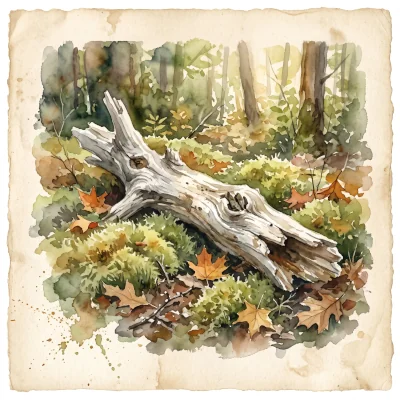
A Piece of Bone is a stone I found on an early morning walk in Santiago de Compostela, trying to learn the lay of the land. We were actually on our way to Saint James Cathedral but, of course, lost our way — and fell upon this meditation garden with poems written on stones of every size. This particular stone caught my attention because it's written in Italian.
My father was an immigrant from Sicily, and my mother's parents were from Italy. Together as children, we heard many different words and different ways to say them — Italian or Sicilian, with lots of laughs along the way. So standing in front of this particular stone felt like more than coincidence to me.
The poem, by Laura Pugno, pairs two images: something as solid and enduring as a piece of bone, and something as ordinary and ever-changing as a blade of grass. A bone is often the last part of a body left after everything else has decayed — to me, that suggests something meant to last. Grass, on the other hand, keeps growing, but it also bends and changes with wind, rain, snow, or drought — very much like my own life.
We're part of nature the same way this stone and the grass around it are — the bone representing what we hold onto from our past, the grass representing the living, breathing environment that keeps shaping our thoughts and emotions in the present. I do feel like I'm part of this garden I fell upon. Nothing is ever a coincidence for me. The garden invites us to pause, think deeply, and find clarity amid the chaos of life.
Laura Pugno — Author
Laura Pugno is a contemporary Italian poet and novelist from Rome, known for weaving nature and quiet spiritual undercurrents through her writing.
Her poetry is particularly known for its evocative imagery and its exploration of the connection between the physical and the spiritual — resonating with readers who seek both beauty and meaning in what they read.

What the Bone and the Stone Share
A bone and a stone share qualities of permanence and endurance — both remnants of life, both carrying the weight of history. In a meditation garden, stones often serve as anchors, grounding us in the present moment. They can symbolize stability and strength, much like bones do in the human body.
Just as bones carry the story of our physical existence, stones can embody the story of the earth — carrying the weight of time and the experience of nature itself. A stone can represent a connection to the past, the way a bone signifies memory. In that sense, this stone reminds us of the layers of history that shape our lives, inviting contemplation about our own experience and how it informs our thoughts and actions.
Both also carry a sense of fragility despite their strength. Stones seem hard and unbreakable, yet they weather and wear over time — just as bones are fragile despite their toughness. This duality speaks to the impermanence of life, and invites reflection on it. Read this way, the poem's central image enriches its meaning: a deep connection between our inner experience and the external world, grounding us in nature while acknowledging the weight of our past, and inviting us to find balance and peace in the present.

Grass and Inner Thoughts
The connection between our inner thoughts and the external world — especially something as ordinary as grass — is a reminder of how we're all part of a larger creation. Our thoughts can feel heavy and complex, filled with worries, dreams, and memories. When we step outside and notice the grass beneath our feet or the trees swaying above us, we can find comfort and inspiration.
Nature has a way of grounding us, reminding us we're part of something much bigger than ourselves. This connection can help us let go of anxiety and embrace a sense of calm — as though God is inviting us to pause, breathe, and reflect on the beauty around us, and to find joy in the present moment.
Our inner thoughts are influenced by the world around us. Seeing vibrant green grass or feeling the warmth of the sun can spark gratitude and peace. Nature encourages us to be mindful and to appreciate the little things. Just as grass grows and changes with the seasons, our own thoughts and feelings evolve too.
This Stone and the Annunciation
Think about the Annunciation, when the angel Gabriel told Mary she would have a son, Jesus. There's something of the same shape in this stone's central image — where something extraordinary enters the ordinary, everyday world.
Just as this stone describes something rising up out of the ordinary, the Annunciation shows how an extraordinary message can change an ordinary life. It's a sacred message becoming real in our world, reminding us that spiritual moments can happen in the middle of our own daily lives.
Guided Reflection
How do I find moments of empathy and connection in my everyday life, even when I'm facing challenges? Reflect on small acts of kindness and understanding that can make a difference in both your life and the lives of others.
How do I balance my inner thoughts with the natural world around me? Consider how you can stay present and grounded, appreciating the simple beauty of nature while also nurturing your inner life.
How can facing the harder realities of life lead to growth rather than away from it? Think about how acknowledging and accepting life's difficulties can lead to personal growth and a deeper spiritual understanding.
Reflecting the Eighth Station
Consider the Eighth Station of the Cross: Jesus meets the women of Jerusalem. In this station, Jesus is carrying His cross and meets women who are grieving for Him. Even in His own suffering, He takes a moment to comfort them.
How does this connect to the stone?
The image of something solid rising up can remind us of the hard times and suffering we all go through, much like Jesus's suffering while carrying the cross. And the poem's quieter image — a thought settling between the mind and the grass — can be read as a moment of pause and connection. Just as Jesus paused to comfort the women, that line suggests finding a balance between our thoughts and the world around us: being present, and finding moments of kindness and connection even when things are hard.
In simple terms, this stone and the Eighth Station both remind us to find moments of compassion and connection, even in the middle of hard times — highlighting the importance of empathy and of being present in the world around us.
Station II · Healing · You are here
Where would you like to go from here?
You do not have to decide all at once. These pages are nearby whenever you are ready. Stay as long as you need — and step forward only when you feel called.