- Rosary and The Way
- Inner Journey
- Contemplative Arts
- Everything Is Erased
Everything Is Erased
Everything Is Erased
Everything Is Erased, and somehow that becomes its own kind of permission.
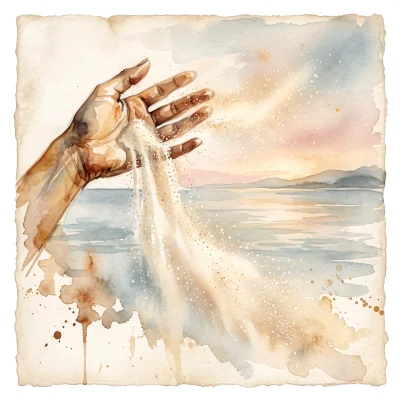
Everything Is Erased is a stone by the Spanish poet José Ángel Valente, and its central idea is disarmingly simple: whatever we build, whatever we hold onto, the air itself will eventually carry it away. Nothing lasts forever — not our memories, not our experiences, not even the things we can reach out and touch.
That's not meant as something bleak. It's an invitation to actually look at life and notice that change is a natural, ongoing part of the journey — not an interruption to it.
José Ángel Valente — Author
José Ángel Valente was a Spanish poet from Galicia, considered one of Spain's finest postwar poets, known for writing on exile, existence, and the human condition. He died in 2000.

Erased by the Air
As I read this stone, it causes me to pause and consider my own life. What does it mean to be alive and aware in a world that's constantly changing — sometimes going in directions I like, and sometimes in directions I don't like so much?
Time does seem to be moving more quickly lately. Is it because I'm getting older, or is time really moving quicker? Each moment seems to disappear so fast. It serves as a reminder to find beauty and meaning in each experience, no matter how brief.
Let's sit with the word "erased" for a moment — could it signify more than just physical disappearance? Could it point to something deeper, like the loss of a former self?
This brings me to a loss of self I've felt myself — once how I used to be, and now how I am today, like two different worlds. I thank Jesus for my current state of mind, and I definitely wouldn't want to go back. Not having the presence of a passed loved one around to hold memories on a daily basis — instead, the memories are fleeting, and sometimes they fade.
This stone challenges me to reflect on my beliefs, my values, and the essence of simply being. Building this page has led me deeper into my own faith and the personal growth of my spiritual journey. The word "erased" here signifies more than physical disappearance; it suggests a deeper loss of self, prompting us to consider what remains of our identity when memories fade.

The Fleeting Nature of Life
The fleeting nature of life invites us to reflect on our existence and the time we're given. Each moment is precious, yet it passes quickly, reminding us that nothing here is permanent. Sitting with that thought can become a guiding light on our spiritual journeys — encouraging us to embrace the present and search for deeper meaning in what we experience.
In contemplating the brevity of life, there's real inspiration to draw from the mystery of the crucifixion. Jesus's sacrifice on the cross is the ultimate act of letting go, and it left behind a legacy of hope and transformation. Even in the face of loss and suffering, there's real potential for renewal and spiritual growth on the other side of it.
The crucifixion invites us to confront our own struggles and the impermanence of our own circumstances. It teaches that through acceptance and surrender, we can find real strength and resilience — and it's worth exploring your own thoughts and feelings about life's passing moments, and how that reflection can lead to deeper self-awareness.
Questions and Statements
How does recognizing life's fleeting nature inspire you to cherish your daily experiences and relationships more deeply?
While moments may fade, the lessons and connections we create can leave a lasting impact on our spiritual journey — what has stayed with you, long after the moment itself passed?
In what ways can the themes of loss and renewal encourage you to find meaning in your own struggles and challenges?
Station II · Healing · You are here
Where would you like to go from here?
You do not have to decide all at once. These pages are nearby whenever you are ready. Stay as long as you need — and step forward only when you feel called.