- Rosary and The Way
- Inner Journey
- Contemplative Arts
- Stone Dream in Time
Stone Dream in Time
Stone Dream in Time
Stone Dream in Time is what an entire city can feel like, if it's old enough.
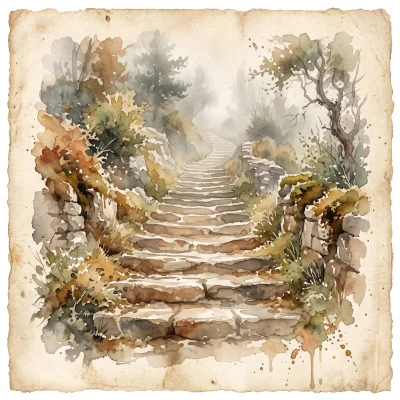
Stone Dream in Time, by the Galician poet Salvador García-Bodaño, is really just a single short line — a description of Compostela itself, and how the whole city feels less like an ordinary place and more like something suspended, half stone and half dream, outside the ordinary flow of time.
The word choice does real work here. Stone suggests permanence and solidity — this place has been here, unmoved, for a very long time. Dream suggests the opposite — something soft, shifting, almost unreal. Put them together and you get exactly what Compostela feels like to a lot of people who visit: a place that has been a site of pilgrimage and quiet contemplation for centuries, and still somehow feels like it's happening to you right now, for the first time.
Salvador García-Bodaño — Author
Salvador García-Bodaño (1935–2023) was a respected Galician poet and longtime member of the Royal Galician Academy, known for returning again and again to Santiago de Compostela as his subject.

A Stone in Dream
For anyone deepening their faith and their own spiritual journey, this stone can be read as a reflection on sacred contemplation, connection, and a sense of the divine that transcends the ordinary flow of time. The "stone" suggests the solidity and permanence of the spiritual truths pilgrims come to Compostela seeking, while the dream-like quality speaks to the transformative, almost mystical nature of the pilgrimage itself.
So we might ask ourselves: in what ways can the act of pilgrimage — walking the Camino de Santiago, for instance — serve as a genuinely transformative spiritual experience? I've personally pondered this more than once, though I'm honestly not sure I could sustain the physical demands of it myself.
What role do sacred sites like the Cathedral of Santiago de Compostela play in the lives of the faithful? How do they provide a space for contemplation, connection, and a deeper experience of the divine? While I was standing in the courtyard in front of the Cathedral, I could sense the high energy of a finishing point for so many who were coming to the end of their walk. Some were just sitting down. Some were jumping with the joy of having made it. Others were taking one final selfie in front of the Cathedral, walking sticks still in hand.
Being inside the Cathedral to witness its full grandeur was its own experience. Saint James did not skimp on anything. It was a beautiful moment to sit with so many people from all over the world and to take part in the Mass together.

A Sensory Experience
The Botafumeiro is a massive incense burner used in the Santiago de Compostela Cathedral — a truly extraordinary piece of liturgical art and tradition. A few details to give you a sense of it: it's enormous, weighing around 80 kilograms (175 pounds) and standing about 1.6 meters (5.2 feet) tall, making it one of the largest censers in the world. It's constructed of silver-plated brass, with a genuinely majestic appearance.
The swinging mechanism is suspended from the dome of the cathedral by a complex system of pulleys. Eight men, known as "tiraboleiros," operate the ropes, swinging the censer back and forth with incredible force — it can reach speeds of up to 60 kilometers per hour (about 37 miles per hour).
Witnessing the Botafumeiro in motion is a genuinely awe-inspiring sight and sound. The swinging motion is mesmerizing, and clouds of incense fill the cathedral with a fragrant aroma. I hope to share my own video of the experience before too long.
Guided Reflection
In what ways can this stone's image of Compostela inspire deeper reflection on your own faith journey? How might it encourage you to consider the transformative potential of your own pilgrimage, whether physical or metaphorical?
How does the enduring significance of Compostela — a site of pilgrimage for centuries — speak to the timeless power of the human search for spiritual meaning?
How do you reflect on the idea of a "stone dream in time"?
Walking the Camino
If you ever decide to walk the Camino, keep in mind that you can reflect the same spiritual practices found in the Rosary and the Stations of the Cross — it's a physical and spiritual journey that mirrors both.
Just as the Rosary guides you through a series of prayers and meditations, the Camino provides a structured path to follow. Each step becomes an opportunity for contemplation and connection with the divine — just as one bead leads to the next, each kilometer walked can represent a new stage of the journey, both outward and inward.
The Stations of the Cross, which recount the final moments of Jesus's life, find their own parallels on the Camino. As pilgrims make their way toward the cathedral, they may pause at designated spots to reflect on the struggles and triumphs of the journey, much as the faithful meditate on the Stations. Each challenge faced, each hill climbed, can become its own modern-day "station," inviting the pilgrim to deepen their faith and find meaning in the experience.
Ultimately, the Camino de Santiago engages the body, mind, and spirit all at once. Like the Rosary and the Stations, it offers a structured path for the faithful, letting them connect with what they believe most deeply and find a sense of purpose and renewal. The physical act of walking becomes a metaphor for the inner journey of the soul.
Station V · Pilgrimage · You are here
Where would you like to go from here?
You do not have to decide all at once. These pages are nearby whenever you are ready. Stay as long as you need — and step forward only when you feel called.