- Rosary and The Way
- Lourdes Pilgrimage
- Assisted Pilgrimage to Lourdes
Assisted Pilgrimage to Lourdes
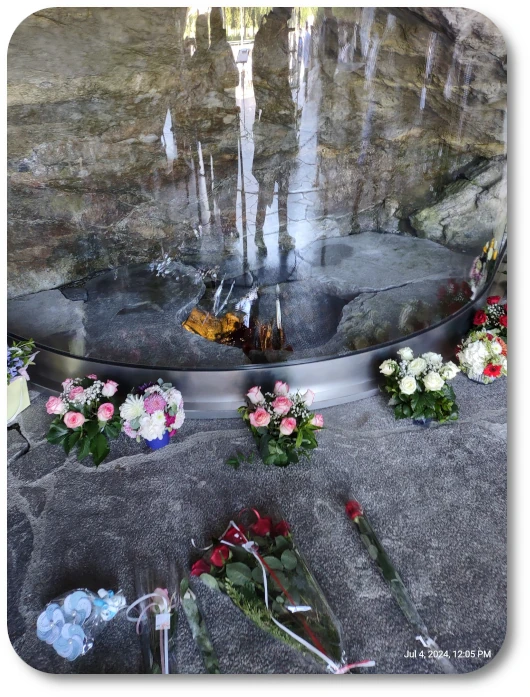
The Lines to the Grotto
There is a moment at Lourdes I keep coming back to, and it was not on any itinerary. It happened one morning while I was simply walking the grounds before our group’s private English Mass, and it is the reason I am writing about an assisted pilgrimage to Lourdes at all.
Lines of wheelchairs. Beds rolling out from the hospital toward the Grotto area, one after another. The sick and the disabled, all moving through the same grounds I was walking on my way to Mass. I did not need any help getting around myself. I simply took note of it, and it stayed with me.
At the candlelight procession I saw them again, moving among thousands of small flames with the rest of us. That was the part that moved me most. There was so much hope in that crowd, and so much prayer.
I am not going to tell you I saw a miracle. I can only tell you that the hope was as real as the flames.
I wrote about the procession itself on my Lourdes pilgrimage page. This page is about the help that makes it possible for someone to be there at all.
Our own group had a quiet version of this. At least six of the people traveling with us needed scooters to manage the walking distances we covered in Lourdes, and our personal guide with 206 Tours handled it. I will come back to that.
I am not a travel site, and I want to say so plainly. But I know someone may be searching for exactly this: a way to get themselves, or a mother, a husband, a friend, to Lourdes when the body says no and the heart says yes.
Can Someone Who Needs Assistance Go to Lourdes?
Yes. There are several ways pilgrims who are sick, frail, or living with a disability can make a pilgrimage to Lourdes. Some organized pilgrimages are built around caring for sick pilgrims. Other pilgrimage groups can accommodate mobility needs when those needs are discussed in advance. The Sanctuary itself also offers accessibility services once pilgrims arrive.
I experienced the second kind myself. The first I saw around me at Lourdes, and I learned more about it while writing this page.
I want to be clear about my place here. I am a fellow pilgrim, not a travel agent or a medical professional. What follows is what I saw and what the organizations themselves say, so please ask them directly, because details and dates change.
Way 1: Go With a Pilgrimage Organized to Care for the Sick
The Order of Malta (American Association)
Each May, members of the Order of Malta American Association travel to Lourdes and are assigned to small teams that assist the sick and disabled pilgrims, called malades. Doctors, nurses, and volunteers are part of the group. A malade applies with the help of a sponsor, and the application is completed with a caregiver and physicians. Ask them directly about eligibility and cost.
Your Diocese or Parish
Many dioceses and parishes organize Lourdes pilgrimages with their own priests and volunteers. When you call, ask whether they welcome pilgrims who need assistance, and what help travels with the group.
Way 2: Go With a Regular Group That Can Accommodate Mobility Needs
A Regular Group Tour That Plans for It (My Experience)
On my pilgrimage, our group traveled with 206 Tours, and at least six people in it used scooters for the walking distances. Our personal guide took care of it. It is simply what happened on mine, not a recommendation. If you go this way, tell the organizer what you need before you book, and ask exactly what they arrange.
What Happens When You Get There
I only saw all this from the outside, so here is what I noticed, along with what the Sanctuary says about itself. Hours and seasons change, so confirm before you go.
Wheelchairs, Ramps, and Volunteers
Wheelchairs are on loan from the Sanctuary Information Centre, volunteers accompany pilgrims with disabilities, and access ramps lead into the places of worship. The Hospitalité Notre-Dame de Lourdes, founded in 1885, is the volunteer service that welcomes pilgrims, especially the sick and disabled, and helps at the ceremonies.
Accueil Notre-Dame and Adapted Rooms
Accueil Notre-Dame is the Sanctuary’s welcome house, made “especially for people who are sick, frail or disabled,” with direct access to the Grotto, wheelchair loans, accessible toilets, adapted rooms, and personalised support. Accessible hotel rooms are also available in town. A nursing service called Santavia can provide care at your lodging, such as treatments, injections, and help with washing. Ask them how to arrange it.
Touching, Lighting, Drinking
The Sanctuary describes an itinerary “designed to give as many people as possible access” to the gestures of Lourdes: touching the rock at the Grotto, lighting a candle, and drinking and collecting the water. The Sanctuary currently lists the baths as open from April to November, with individuals not needing prior booking. Because arrangements can change, I would confirm the current details before going. Volunteers also guide the Water Gesture at the Chapel of the Good Samaritan, which the Sanctuary describes as open to the sick and able-bodied alike. I describe it on my Lourdes pilgrimage page.
The Processions and the OCH
The Sanctuary’s daily processions, the Eucharistic procession and the torch-light Marian procession, are accessible to all. That matches exactly what I saw. The Christian Office for Handicapped People also runs a drop-in centre, where the Sanctuary says you can find “a listening ear, compassion and support.”
Things I Would Ask About Before Going
These are the questions I would want answered, drawn from what came up while I watched and what the organizations mention. Your doctor and your group organizer are the ones to ask.
Ask your doctor first
Organized assisted pilgrimages ask for physician information up front. The Order of Malta’s application, for example, is completed with the pilgrim, the caregiver, and their doctors. I would ask early whether the trip is right for me and what I need to carry.
Ask the airline what help they offer
Airlines have their own wheelchair-assistance categories, and procedures vary. When booking, I would explain exactly how far I can walk, whether I can manage aircraft stairs, and whether I need help to my seat, then ask the airline to confirm the assistance before the flight.
Ask your organizer before you book
Whether it is a diocese or a tour, I would tell the organizer what I need at the start, not at the airport. In my group, our guide took care of it for the six people who needed scooters.
What I Would Have Written Down Before I Called
None of this is medical advice. It is simply what I would want in front of me before I picked up the phone or wrote the email, so I was not fumbling for it while someone waited on the other end.
Walking tolerance — how far, and for how long
Wheelchair type, manual or powered, or a scooter
Whether I can transfer seat to seat on my own
Whether a caregiver is traveling too
Medical equipment or oxygen, if that applies
My travel dates, and how flexible they are
If you want to see what a day at Lourdes actually feels like, the Grotto, the processions, the pace of it, that is the fuller story. This page was about the planning. That one is about being there.
Lourdes, From Where You Are
Not everyone can go. Illness, cost, caring for someone at home, a body that says no. I was blessed to make a pilgrimage that took me through parts of three countries, and I know that kind of journey is not within reach for everyone. But not being able to go does not mean you cannot make a pilgrimage.
I have tried to bring Lourdes to you in two ways. There are two sets of Stations of the Cross at Lourdes itself, and both are here to walk from a chair, a bed, or a quiet room. And there may be a shrine or a rosary garden closer to where you live than you realize. Here is one of mine, below.
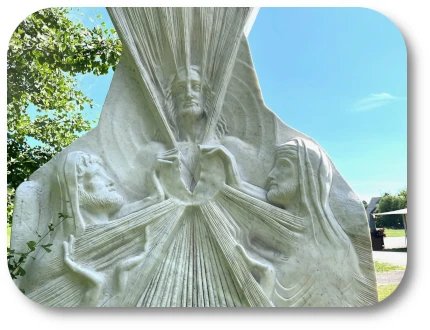
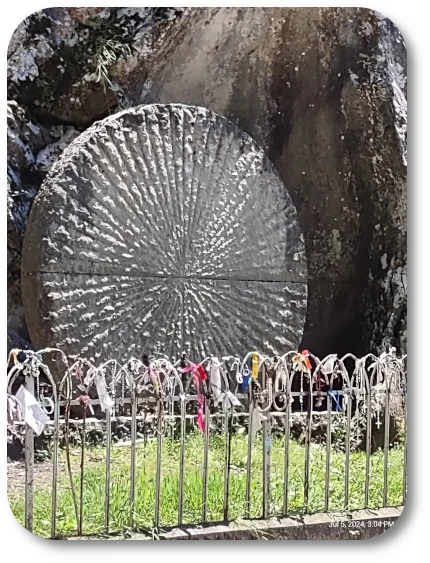
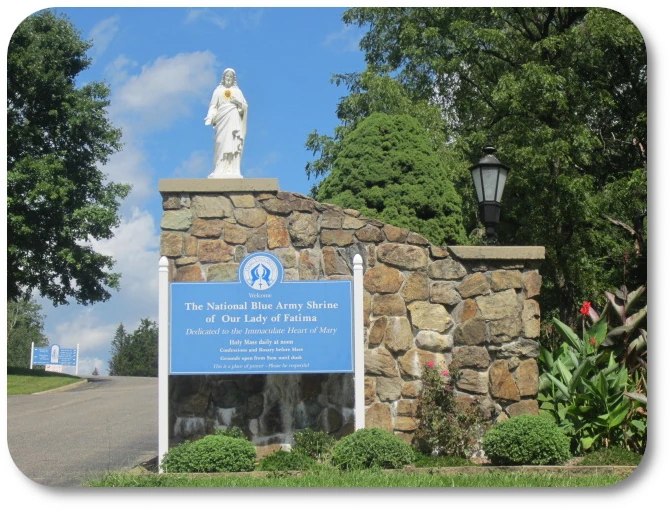
Bernadette remembered that Our Lady did not promise her happiness in this world, but in the next.
Bernadette’s account of the third apparition, February 18, 1858
If you are reading this for someone you love, I hope it is a place to start. And if you are reading it for yourself, I hope you know that Lourdes has always made room for you.