- Rosary and The Way
- Grow in Virtue
- Forgiveness
Forgiveness
Forgiveness and the Story We Can't See
Forgiveness from inside our own version of events. But what if the other person's version is just as painful — or tells a story we were part of without knowing it?
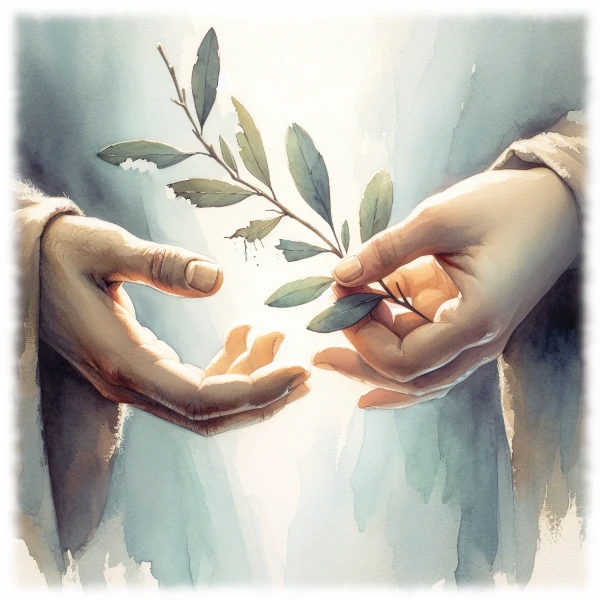
Forgiveness can be misunderstood because we only ever see it from our own side. We feel hurt. We know what was done. We know what was said, or not said. And from inside that experience, we forgive — or we try to. But what about the other person's version? What if their account of the same events is just as painful? What if it says something about us that we are not ready to see?
I think about this often when forgiveness has been hardest for me — in situations where a family relationship broke apart and the estrangement has lasted years. I know my side of it. But I don't fully know theirs. And I have sat with the uncomfortable possibility that their version of events could be equally painful, or could implicate me in ways I haven't fully reckoned with. That doesn't make the hurt less real. It makes forgiveness more honest, and more humble.
I believe there will come a moment — when God shows us the full story of our lives — when we will finally see what we said and did to others, and how it landed. When that happens, I think many of us will understand, for the first time, who we also owed forgiveness to. That is a thought worth sitting with now, before the end.
The clearest experience I have had of forgiveness arriving as a gift rather than a decision came through a dream, years after I had left a difficult work situation. I felt a release — a quiet, unmistakable sense that it was finished, that I had somehow come through the test. I woke up lighter. The forgiveness didn't come when I decided to forgive. It came when God gave it to me. And I received it.
The ties between human beings and their souls are not the same as the forgiveness we work out between ourselves day to day. Both are real. But one is ours to manage, and one belongs to God. I have learned to do my part — to keep praying, to keep returning, to not run away from the wound — and to trust Him with the rest.
What Forgiveness Actually Asks of Us

Forgiveness is a difficult virtue because we are prideful. Rising above a situation and forgiving silently isn't easy — but I've found that with God's help I can forgive and let go. Still, there are times when the pain lingers deep within my heart. That doesn't mean the forgiveness wasn't real. It means I'm human.
Forgiveness is not about excusing the wrongs done to us. It's about freeing ourselves from the heavy burden of resentment and anger. It's about choosing to move forward with a lighter heart. And it is a continuous process — not one decision, but many returns to the same place of choosing not to hold it anymore.
The Hardest One to Forgive
I completely understand the feeling of being the hardest on myself — especially during those sleepless nights when my mind replays my mistakes and how I could have handled situations differently. It's challenging to quiet those thoughts of what I should have said or done. Recognizing that I'm a work in progress helps, but it doesn't entirely excuse the mistakes I've made.
I've learned that the first step is to start with forgiving myself. Being kind to myself and acknowledging I'm doing my best. Asking for help in my prayers to God for the strength and guidance to move forward. Through self-forgiveness and divine support I find the peace and resilience to grow and improve.
This journey of self-forgiveness isn't easy, but it's necessary for healing and personal growth. Each step forward, no matter how small, brings me closer to a place of peace and understanding. By trusting in God's grace and learning to be kinder to myself, I continue to progress on this path.
Pride as the Obstacle
Pride can be a major obstacle to forgiveness. When we're prideful, we struggle to admit we've been hurt — because it feels like a blow to our ego. Pride makes it difficult to see the situation from the other person's perspective, or to acknowledge our own vulnerabilities.
Letting go of pride and embracing humility is essential for true forgiveness. When I can set aside my ego, it's easier to approach the situation with compassion and understanding. This doesn't mean excusing the hurt or pretending it didn't happen — but rather acknowledging it and choosing to move forward.
Humility allows us to recognize that everyone makes mistakes, including ourselves, and that we all need forgiveness at times. By letting go of pride, we open the door to healing and deeper, more meaningful relationships. It's a challenging process, but with God's help it's possible to find the strength to forgive and to let go of the burdens that pride imposes on us.

Where Are You With Forgiveness Today?
A few honest questions, each one a doorway. Choose the one that meets you where you are right now.
"Is there someone you have forgiven — or need to forgive — who doesn't know it, and may never know it? What does that ask of you?"
Journal: What Stirred Your Heart Today →"The people who know us best can hurt us most. Where is pride making it harder for you to forgive someone close to you?"
Read: Humility and the Rosary →"On the nights when your mind replays your mistakes — what would it look like to offer yourself the same compassion you'd give someone you love?"
Read: Perseverance, the Grace of Not Stopping →"Jesus forgave from the cross before anyone asked. Which of the Sorrowful Mysteries speaks most directly to the injustice you are still carrying?"
Journey: The Sorrowful Mysteries →"Has forgiveness ever arrived for you not as a decision you made, but as something that came quietly — a dream, a moment, a sudden lightness?"
Read: Courage and Fortitude →"What would it look like to bring the person you are struggling to forgive — or yourself — into the Sorrowful Mysteries today?"
Pray: The Friday Rosary →What Gets in the Way — and What Comes Through
Self-forgiveness can be more challenging than forgiving others because we tend to set higher standards for ourselves. We expect better of ourselves and the gap between who we intended to be and what we actually did can feel insurmountable. But practicing self-forgiveness leads to self-compassion and personal growth — it allows us to move forward with a lighter heart, free from the weight of past mistakes.
Difficulty in understanding or empathizing with the person who caused us harm can also block the process. When someone hurts us in a way we cannot explain or justify, the wound stays open longer. But developing empathy — even imperfect, even incomplete — enhances our emotional intelligence and helps us build stronger, more compassionate relationships over time. It deepens our understanding of human nature and our shared vulnerability.
The sense of injustice or betrayal can make it hard to move past the hurt and offer forgiveness. But forgiving others helps us reclaim our personal power and move forward without being anchored by past wrongs. It fosters a sense of empowerment and freedom that resentment never can.
Forgiveness and pain can coexist. Choosing to forgive does not mean the hurt disappears immediately. It means you have stopped letting the hurt run your life.
Carry this virtue into the Rosary and let the Mysteries deepen what you have found here.
Pray through all five Sorrowful Mysteries and meet Forgiveness in Christ's own journey.
Pray it todayThe Sorrowful Mysteries are prayed on Tuesdays and Fridays. Begin with today's Rosary.
Explore all virtuesReturn to the full garden of virtues, arranged by the Mystery that carries each one.