- Rosary and The Way
- Grow in Virtue
- Detachment
Detachment
Detachment and the Art of Letting Go
Detachment isn't about caring less. It's about learning what was never yours to carry in the first place.
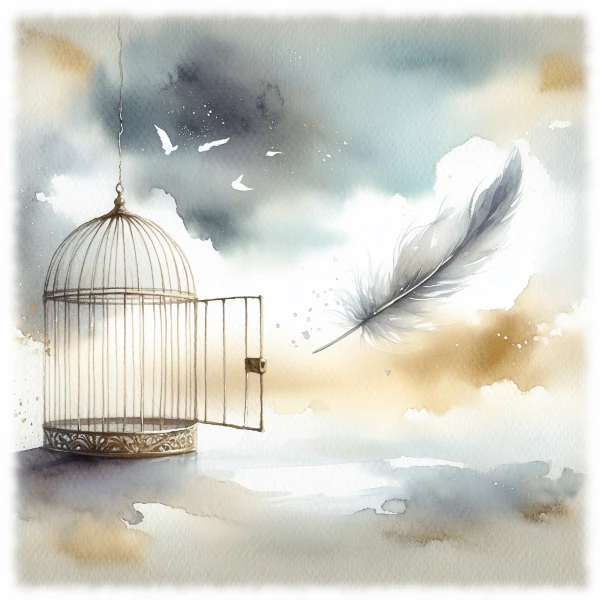
Detachment is one of my favorite virtues to practice. Just the other day, I deleted a few games from my phone. These games used to fill my time with mindless busyness. Despite how high my levels of play were, I calmly moved them to the trash can on my phone. It felt incredibly freeing — and later in the day, I realized just how addicted I was. The first thing I did when I picked up my phone was to go to those games.
Practicing detachment like this from time to time is a good exercise. It builds the strength to let go of other things that might seem much harder to do. And it usually starts small. A drawer. A closet shelf. A box in the basement that has been there for fifteen years. The attic. The garage — if you can't park your car in the garage anymore, it's possible you have collected too much stuff.
I truly believe that when we start unloading all the unnecessary things we collect over a lifetime, it becomes much easier — and genuinely liberating — to focus on what truly matters. You will never find yourself saying, "I don't have time for that." Because suddenly you do.
But the deepest lesson I ever learned about letting go didn't come from clearing a shelf or deleting an app. It came from losing my dad.
What He Left Me

Being the youngest of four children, I always felt closest to my dad. He taught me how to mow a lawn, tend a vegetable garden, paint, cement, change a tire. When I finally had my own home, I used every one of those skills — and I still do today. In a way, he never left. He's in the way I hold a paintbrush and the way I read a garden.
My dad died at 87, when I was in my early fifties. After he was gone, a family dispute began over his belongings. There was one thing I wanted more than anything else: a photo album he had brought home from World War II. He used to sit with me and show me those photographs — what had happened in Germany, what he had witnessed, how bad things were. I didn't fully understand then what those images meant to him. I understand now. He had walked through something unimaginable and come out the other side with a wife and four children. That album was part of his heart.
For me, the album wasn't really about the war. It was about the time I spent sitting next to him. Through a family dispute I won't go into here, I didn't get it. And for a while, that hurt in a way that was hard to put words to.
My dad once told me that the photos he had so much enjoyed were written on his heart. He always had the memories.
That stopped me. Because he was right. The album was his to carry — not mine. What was mine was something else entirely. My favorite memory from childhood was my dad taking me for wheelbarrow rides. I shared that with him in the days before he died. He just smiled.
No album needed. The wheelbarrow. The smile. That's what I carry. And nobody can dispute that.
What Detachment Really Means
Some may misunderstand detachment as not caring. It isn't that. It's about loving and valuing things in the right way — without allowing them to take the place of God in our hearts, and without clinging to what was never ours to keep.
Detachment helps us focus on God. Just like with my phone games, I would often get a feeling that I should be reading something spiritual instead — but I'd tell myself, "Later." This is how we so easily choose something utterly unimportant over what truly matters. Detachment is the practice of catching that "later" before it becomes a habit.
I began downsizing my possessions — clothes, shoes, bags, excess furniture. I realized these items are not essential for true happiness, especially in our relationship with God. By practicing detachment, we shift from worrying about what we have or need to a state of freedom. Our nature often wants to revert to old habits, and that's okay. Notice I said "practice" because it really is an ongoing effort.

Where Are You With Detachment Today?
A few honest questions, each one a doorway. Choose the one that meets you where you are right now.
"Is there something God has been nudging you toward that you keep telling yourself you'll do — later?"
Journal: What Stirred Your Heart Today →"What is one thing you own that owns you back? What would it feel like to let it go?"
Reflect: Gratitude for What Remains →"Mary and Joseph offered Jesus back to God. Is there something you're holding that you know belongs to Him, not you?"
Journey: The Presentation of Jesus →"Is there a loss in your life where you're still holding on — to an object, a relationship, or a version of things that's gone?"
Read: Forgiveness, Letting Go and Embracing Peace →"Where do you feel the cultural pull that the more you have, the more you are worth?"
Read: Humility and the Rosary →"What would it look like to bring what you're holding too tightly into prayer today, instead of carrying it alone?"
Pray: The Monday Rosary →Is It Time to Simplify?
It's important to remember that attachments aren't just about material possessions. They can include food, money, relationships, and even a job that's going nowhere. For some, simplifying comes easily. For others, the mere thought can be overwhelming. Just thinking about it could be the first step.
Whatever you do, don't rush into it and decide to get rid of something your spouse or partner wasn't ready to part with. This is a gradual process, but one that's well worth the effort. Through prayer, we can seek God's guidance and strength to help us let go. It's about making thoughtful choices and recognizing what truly matters.
And detachment isn't only about things. Sometimes people are not good for us, and this virtue asks us to be honest about that too. A relationship that pulls you away from God, drains your peace, or keeps drawing you back into old patterns — that can need releasing just as much as the clutter in the attic. This isn't about being cold or uncaring. It's about keeping your eyes on Jesus, and being honest with yourself about what is drawing you closer to Him and what is pulling you further away. We get so caught up in the things of the world. Detachment is the practice of loosening that grip, one honest choice at a time.
What Gets in the Way
Cultural pressure is my nudge. I'm constantly seeing, hearing, and feeling the message that the more I have, the more I am worth. It takes real awareness to push back against that. Fear is another one — fear of losing everything can make us hold on tighter to our possessions. I remember always saying to my parents: we come into the world naked, and we go out naked. What do we have to fear?
Our attachments can also keep us from the people right in front of us. "Can't spend time with you — I have to clean my car this weekend." What keeps you from doing things with others? When we become attentive to people instead of possessions, we stop wasting time on things that don't love us back.
Our treasures are in Heaven. I call it the 401G — G for God. Seriously though, if you can develop this letting go process, your perspective on life and your spiritual journey will change in unbelievable ways.
As I was writing this page, I overheard a line from an old movie: "When you see a hearse, you don't see a U-Haul attached." It made me laugh, because it's so perfectly fitting. We spend so much of our lives collecting, and in the end, none of it comes with us. What comes with us is who we became — and who we loved.
Carry this virtue into the Rosary and let the Mysteries deepen what you have found here.
Pray through all five Joyful Mysteries and meet Detachment in Mary's quiet yes.
The Joyful Mysteries are prayed on both days, with two different meditations. Choose whichever day is yours today.
Return to the full garden of virtues, arranged by the Mystery that carries each one.